
Kizomba
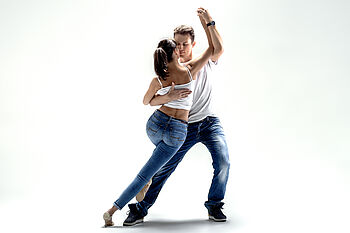
Kizomba is a music and partner dance style from Angola that developed in the late 1970s and early 1980s. The word "Kizomba" comes from the Angolan language Kimbundu and means something like "festival" or "gathering." Originally, the dance was primarily performed at celebrations, weddings, or gatherings with family and friends.
Its roots lie in the Angolan dance Semba. When new music styles emerged in the 1980s, dancers adapted the Semba steps to slower and more rhythmic music. This resulted in a blend of Semba and Caribbean Zouk, creating the characteristic, calm, and romantic Kizomba rhythm.
Typical of Kizomba is dancing as a couple in close connection; the focus is on intense communication between the dance partners and the music. Smooth body movements and harmony between the partners are particularly important.
In terms of positions and posture, Kizomba shares similarities with Argentine Tango, which is why it is also called "Afrotango." Despite these similarities, they differ significantly in style: Kizomba is usually danced slower, softer, and more fluidly, placing great emphasis on relaxed, rhythmic movements to the music. Tango, on the other hand, often features more precise, pronounced steps and more pronounced changes of direction.
Today, Kizomba has spread worldwide from Angola and is one of the most popular African partner dances.
Tedson has been a passionate dancer since his youth and taught salsa and bachata during his student days. Dancing has always been a major part of his life, as it not only brings and strengthens his zest for life but also enables social and intense interaction with many wonderful people whom he has been fortunate enough to meet through dance. On a dance trip to Lisbon, he fell in love with kizomba and has since been wholeheartedly committed to establishing this dance in the Göttingen dance scene. Over the years, more and more enthusiastic kizomba dancers have come together, forming an ever-growing community in Göttingen.
Kizomba courses in summer semester
“Everyone is welcome to become part of this community. You can register as a couple or individually. The dance classes are taught in German and English. We look forward to dancing with you!”
Beginner (without pre-knowledge)
| Day of the week | Monday |
| Time | 7:00 pm - 8:00 pm |
| Place | Clubraum 3, Zentralemsna |
| Dates | 8 sessions, from 15.06.2026 |
| Price | 40 € students | 50 € non-students |
Intermediate
| Day of the week | Monday |
| Time | 8:00 pm - 9.00 pm |
| Place | Clubraum 3, Zentralemsna |
| Dates | 8 sessions, from 15.06.2026 |
| Price | 40 € students | 50 € non-students |


